5 min readAuf Deutsch lesen
Should Beginners Learn Gel or Acrylic First?
Learn whether to start your nail design training with gel or acrylic, and why mastering both gives you an advantage in Vienna.
In short
Beginners should generally start with gel because it does not set until cured under a lamp, allowing plenty of time to correct mistakes and learn proper structure. However, learning acrylic as a second step makes your skills rarer and significantly more valuable for professional salon employment.
At a glance
- First recommended material
- Gel
- Second recommended material
- Acrylic
- Where taught
- Nail2Learn classroom in Vienna
- Trade status
- Freies Gewerbe (unregulated trade)
Why Gel Is the Ideal Starting Point for Beginners
Starting your journey into nail technology can feel overwhelming when you stare at a brush, a jar of product, and an uneven natural nail. Gel provides a forgiving entry point because it remains completely stationary until you place the hand inside a UV or LED lamp. This means you can wipe away a misplaced bead, smooth out a bumpy surface, and adjust your side lines without feeling rushed against a drying clock.
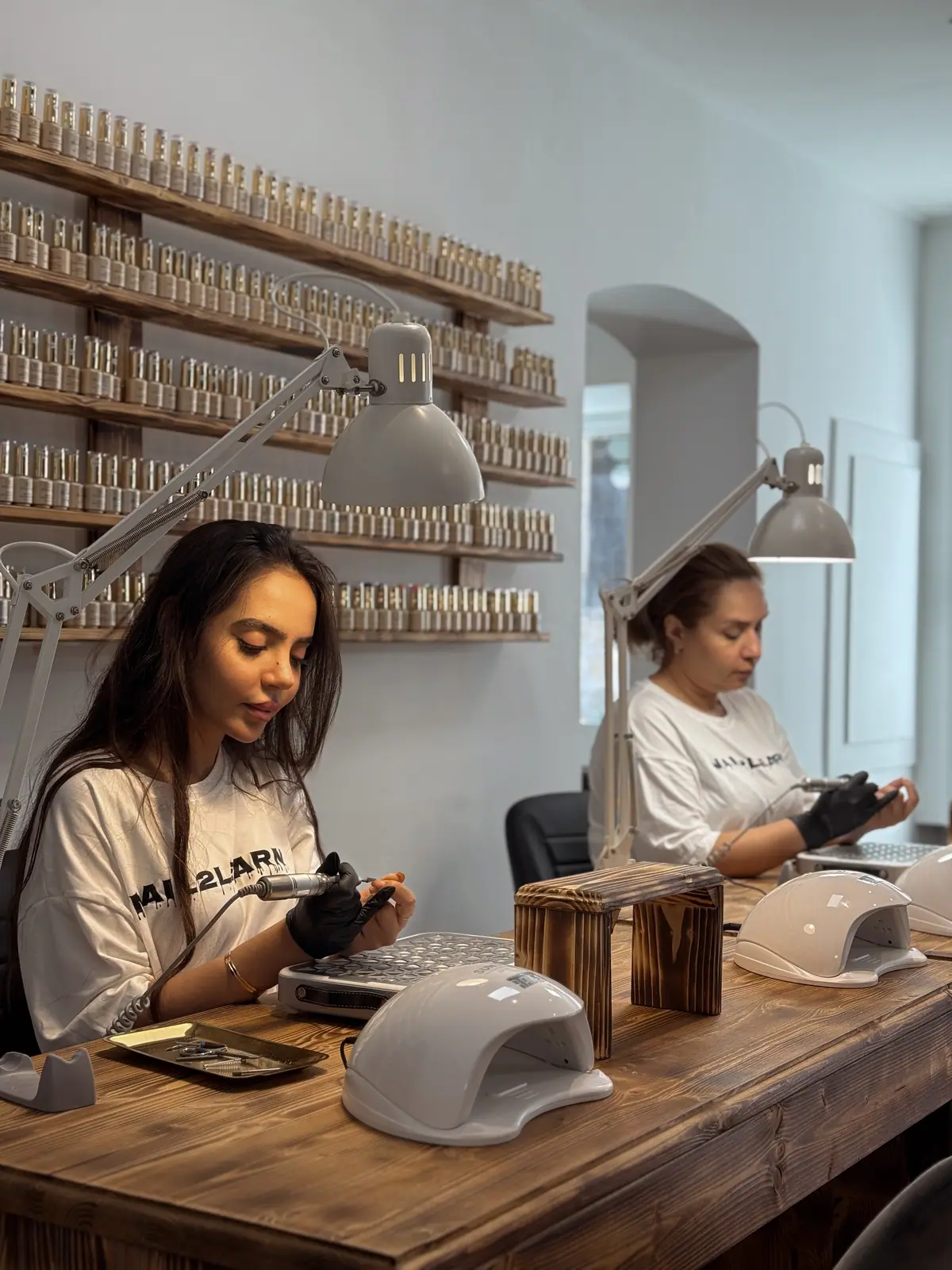
Because gel needs little filing once cured, learners can focus entirely on understanding nail geometry rather than spending hours correcting thick mistakes with a hand file. You learn how to place the apex correctly, how to prepare the natural nail plate, and how to maintain proper hygiene at the practice station in our Vienna academy classroom.
Most nail salons across the city rely on gel as their primary service offering for everyday clients. Mastering this material first ensures you can walk into a local studio and immediately perform the most common treatments requested by everyday customers.
Understanding the Unique Challenges of Acrylic
Once you grasp the basics of nail prep and structure using gel, introducing acrylic marks your next major professional milestone. Unlike gel, acrylic sets on its own within seconds through a chemical reaction between the liquid monomer and powder polymer. There is no lamp involved, which means your hand movements must be decisive, rhythmic, and well-trained.
Building hard, durable, and exceptionally long extensions requires absolute precision when picking up the liquid-to-powder ratio on your brush. If the mixture is too wet, it floods the cuticles; if it is too dry, it crystallises and lacks structural integrity. Training this technique requires repeated practice on real models under the guidance of experienced instructors.
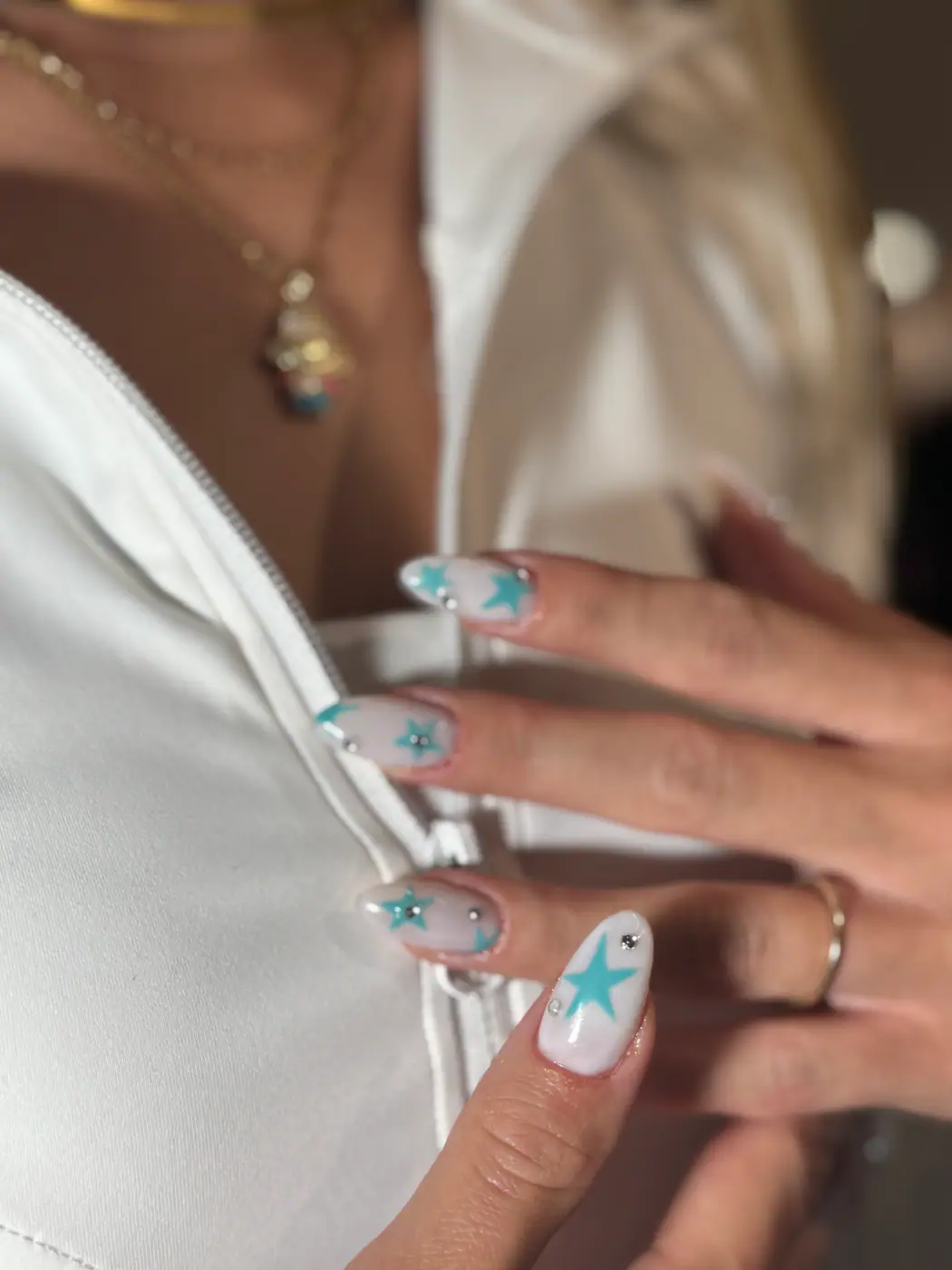
Despite the steeper learning curve, acrylic remains the premier material for extreme lengths, complex sculpted shapes, and sharp architectural edges. Technicians who can build these structures cleanly are much harder to find in the local job market.
How Dual-System Mastery Makes You Employable
In Austria, nail design operates as a freies Gewerbe, meaning an unregulated trade where no formal apprenticeship is legally required to open a business or work in a salon. Because formal certificates are not mandated by law, salon owners judge your competence entirely by what your hands can actually do during a practical test.
Since the vast majority of local technicians only offer gel applications, knowing how to work with acrylic as well instantly sets your application apart. Studios that cater to clients seeking specialty extensions, hard-wearing overlays, or intricate sculptured nail art are constantly searching for versatile professionals.
Graduates who complete both training modules often find opportunities waiting for them within partner businesses and local salons. If you want to see where structured training can take your career, you can explore our academy overview to learn more about our hands-on philosophy.
Gel Versus Acrylic: Key Differences for Beginners
| Gel | Acrylic | |
|---|---|---|
| Setting time | Only under the UV/LED lamp | On its own within seconds |
| Error correction | Easy before curing | Requires filing if set incorrectly |
| Primary salon use | Everyday overlays and standard extensions | Sculpted shapes and long extensions |
| Market availability | Offered by almost all technicians | Rarer skill among local technicians |
Both techniques are taught sequentially at our Vienna academy.
Learn what you are reading about.
In the Vienna classroom, on real models, with a starter kit. The course covers what an article can only touch.
See the courses
The Recommended Learning Path at Nail2Learn
Our curriculum is structured to take complete beginners and turn them into confident studio professionals without rushing the process. We guide you step-by-step through every phase of nail modelling, ensuring you build muscle memory and technical understanding before advancing to harder mediums.
We always recommend beginning with gel to master fundamental skills such as sanitation, nail plate preparation, apex placement, and proper filing techniques. Once those core habits become second nature, adding acrylic to your repertoire expands your creative limits and your professional value.
If you are ready to take the next step toward a professional career in the beauty industry, you can submit your details through our application form to join our upcoming training sessions in Zieglergasse.
Building a Versatile Career
Choosing between gel and acrylic does not have to be an either-or decision for your career. By starting with gel to build your confidence and adding acrylic to tackle advanced extensions, you become the kind of versatile technician local salons actively look to hire.
The short version
- 1Gel gives beginners breathing room because it stays workable until cured under the lamp.
- 2Acrylic requires speed and precise hand control because it sets on its own within seconds.
- 3Most Vienna studios rely on gel for daily treatments, making it the essential foundation.
- 4Technicians who master acrylic alongside gel stand out because fewer professionals offer it.
Apply, free and without obligation.
Two minutes for the form, then we call you and talk through which course fits – instalments and funding included.
Apply nowFrequently asked
Sources and further reading
Does this sound like you?
Send your application
Two minutes. We get back to you within one working day, in German or English.